
A -40°C boot on a mild dog walk is a sweaty business. Here's how to match your welly's warmth to what you actually do.
Quick answer: for everyday British winters, a welly comfort rated to -20°C is plenty for most people. That's a 4mm or 5mm neoprene boot like the Grubs Frostline 5.0. If you stand still outdoors for hours in hard frost, say lambing, beating, gamekeeping or working on the hill, go for a boot rated to -40°C like the Snowline 8.5 or Bearline 8.5. For mild, wet weather, a rubber boot rated to -10°C is enough.
Cold feet. Nowt ruins a day outdoors faster. You can have the best coat in Lancashire, but if your toes have gone numb by ten o'clock you'll be thinking about nothing else. The fix isn't "buy the warmest boot going", though, because a -40°C boot on a mild autumn dog walk is a sweaty business. The trick is matching the warmth to what you actually do.
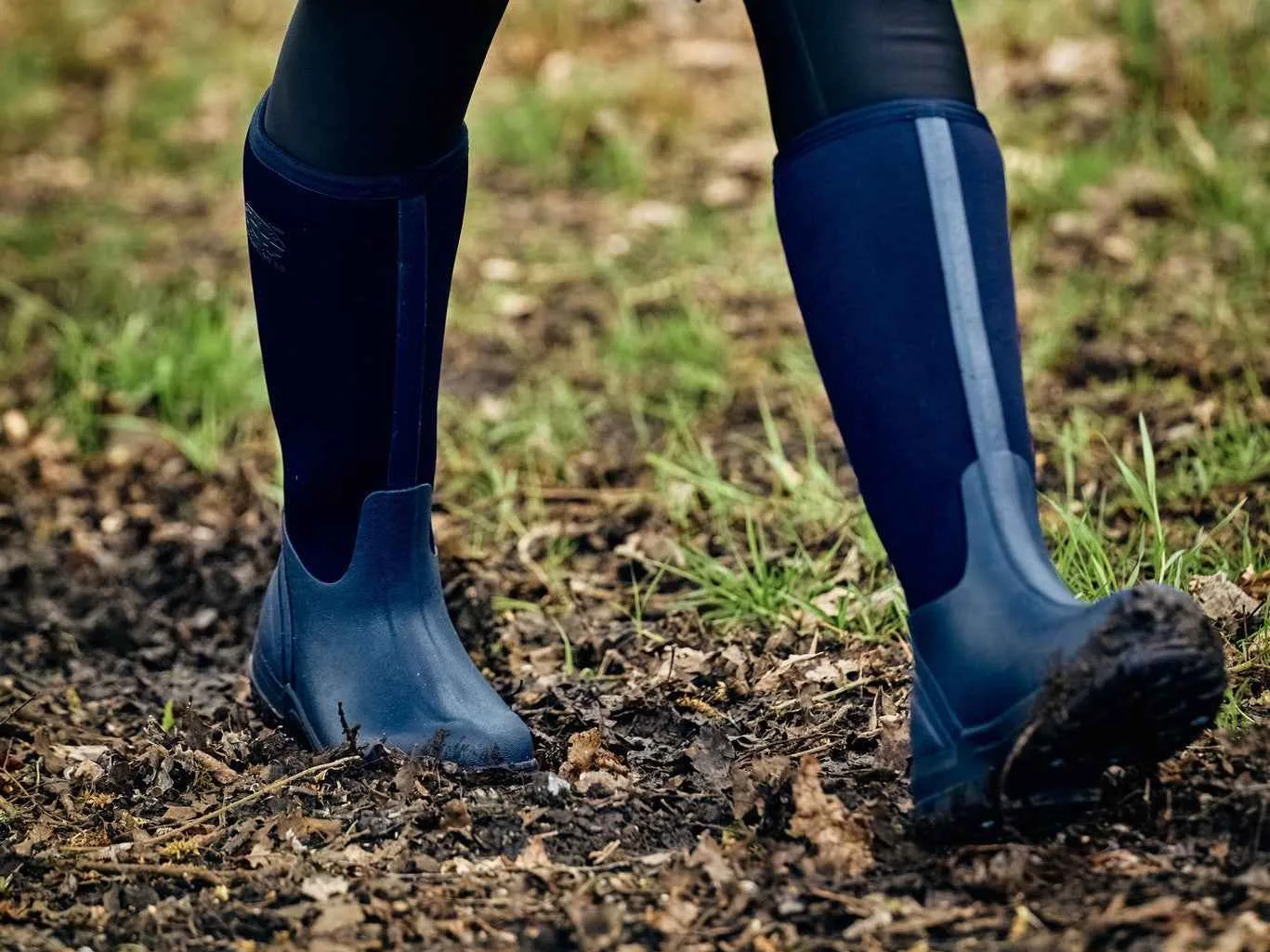
What does a welly comfort rating mean?
A comfort rating is the temperature range a boot is designed to keep your feet comfortable in. At Grubs we give every insulated boot a range. The Frostline 5.0, for example, is rated -20°C to +20°C, and the Snowline 8.5 is rated -40°C to +10°C. The top number matters too: it tells you when the boot starts getting too warm.
Three things move the goalposts:
- How active you are. Insulation doesn't make heat. It holds on to the heat your body makes. Walking briskly produces lots of it, while standing at a gate produces very little. If you stand still a lot, choose more insulation than the thermometer suggests.
- Your socks and your fit. A boot that's too tight squashes the insulation and cuts your circulation, and both make feet colder. Grubs boots allow 15mm for wool-blend socks, so there's room without sizing up. See our welly fit guide.
- Your own circulation. Some people just feel the cold more. Treat any rating as a guide, not a guarantee.
The Grubs warmth ladder
Here's every level of warmth in our range, from mild-weather boots to the toastiest field boots we make:
| Insulation | Example boots | Comfort rating | Best for |
|---|---|---|---|
| None (unlined rubber or PVC) | Typical classic welly | Not rated | Festivals, summer rain, quick jobs |
| Rubber with lining | Rainline 2.0, Highline 2.0 (2mm neoprene lining) | -10°C to +20°C | Mild, wet British weather |
| 3mm neoprene | Speyline 4.0 | -20°C to +20°C | Country walks, shooting days |
| 4mm neoprene | Bowline 4.0, Tideline 4.0, Bromley 4.0, Skyline 4.0 | -20°C to +20°C | Year-round walking and gardening |
| 5mm neoprene | Frostline 5.0, Midline 5.0, Fenline 5.0, Tayline 5.0 | -20°C to +20°C | Winter walking, all-day farm work |
| 8.5mm neoprene or fleece-lined | Bearline 8.5, Snowline 8.5, Treeline 8.5 | to -40°C | Long, static days in hard frost |
Ratings come from each product's specification. They're a guide to comfort, not a lab guarantee for every wearer.
Why some wellies feel colder than their rating
Most cold doesn't come in through the sides of a welly. It comes up from the ground. Stand on a frozen yard or snow and the cold soaks through a thin sole in minutes. That's why Grubs boots don't just rely on the neoprene leg:
- The 6mm NITROCELL™ footbed holds around a million microscopic nitrogen bubbles that insulate you from cold surfaces. It's in the Frostline, Fenline, Midline, Speyline, Snowline and more.
- INSUFOAM-ULTRA™ neoprene traps a layer of warmth around your foot. On the Bearline 8.5 it's 8.5mm thick and wrapped a full 360° around the foot.
- The Snowline 8.5 and Treeline 8.5 combine a nylon outer, 5mm buoyant insulating foam and 3mm high-loft fleece that wicks moisture, so your feet stay warm without sweating.
- A SUPERDRI™ lining wicks sweat away. Damp feet get cold feet, so dry matters as much as thick.
Plenty of neoprene-lined wellies on the market top out at around -20°C. Our 8.5 boots are rated to -40°C, which is genuinely useful if you're out all night with sheep in February.
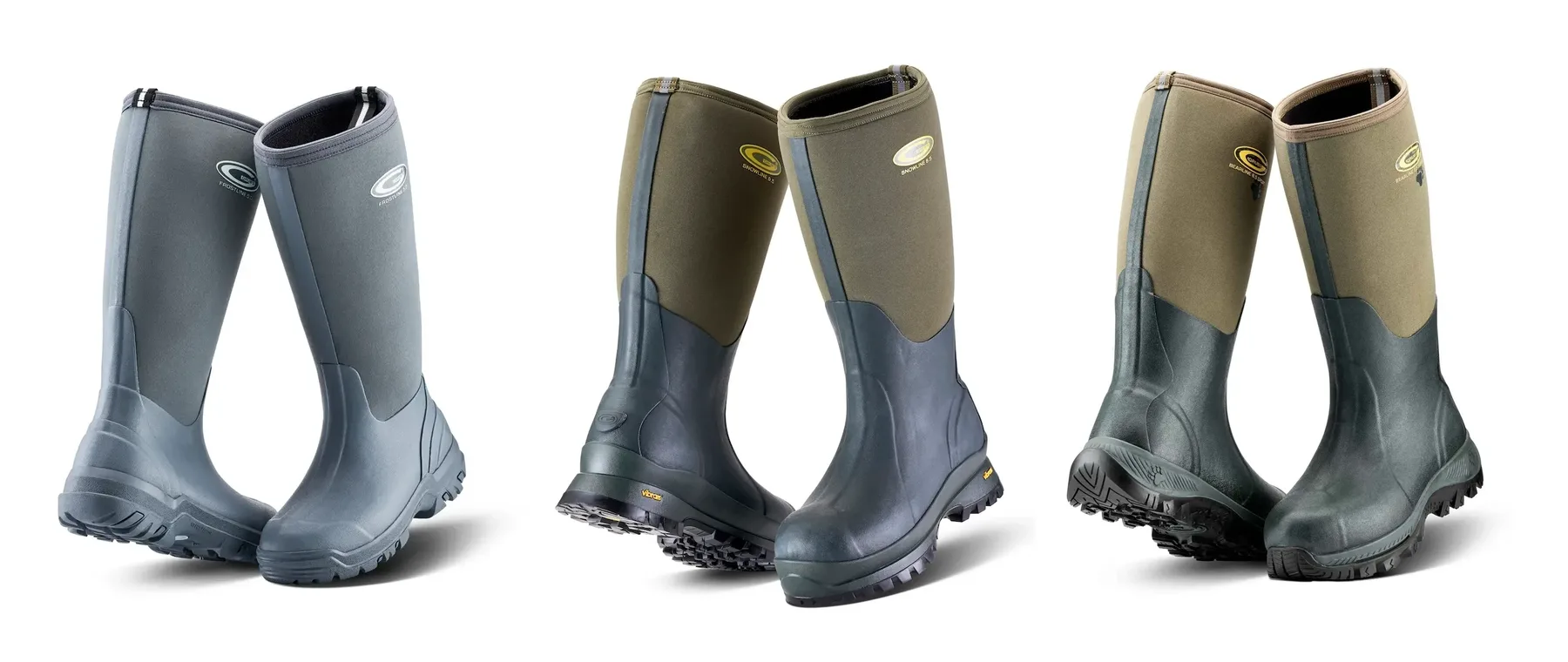
So how warm should your wellies be?
- Quick dog walks, the school run, the garden: 4mm to 5mm neoprene (rated -20°C) is ample all year, or a lined rubber boot like the Rainline 2.0 if you run warm.
- Long winter walks: 5mm neoprene like the Frostline 5.0 or Midline 5.0.
- Farm work, all day, every day: 5mm with a hard-wearing sole, like the Fenline 5.0 or Tayline 5.0. Our best farming wellies guide goes into detail.
- Lambing, calving, shooting, beating, hill work, standing still in hard frost: 8.5mm, rated to -40°C. Choose the Bearline 8.5, Snowline 8.5 or Treeline 8.5.
Shop the warmest boots in our Field & Agriculture collection.
Insulated welly questions
How warm are neoprene wellies?
That depends on the thickness. Grubs boots with 3mm, 4mm or 5mm INSUFOAM-ULTRA™ neoprene are comfort rated from -20°C to +20°C. Our 8.5mm boots, the Bearline 8.5, Snowline 8.5 and Treeline 8.5, are rated to -40°C.
What's the warmest welly Grubs makes?
The Bearline 8.5, Snowline 8.5 and Treeline 8.5 are all rated to -40°C. The Bearline has 8.5mm neoprene wrapped 360° around the foot, while the Snowline and Treeline add a 3mm moisture-wicking fleece lining.
Can insulated wellies be too warm?
Yes. Most of our neoprene boots are rated up to +20°C, and the 8.5 boots up to +10°C. Above that your feet will get hot, so for summer a lighter boot or a lined rubber welly like the Rainline 2.0 is more comfortable.
Do I need thermal welly socks?
Usually not. A good insulated welly with a NITROCELL™ footbed does the job with normal wool-blend socks. Just make sure your socks don't make the boot tight, because that squeezes the warmth out.
Why do my feet still get cold in insulated wellies?
The usual causes are a boot that's too tight, damp socks, a thin footbed letting the cold through from the ground, or simply standing still for hours in a boot rated for active use. Try a warmer rating or a boot with a NITROCELL™ footbed.
Want the science of the foam itself? Read neoprene wellies explained. Then pick your warmth level from the Field & Agriculture range.