
Both are brilliant at different jobs. An honest side-by-side from a family firm that makes both.
Quick answer: neoprene wellies are warmer, softer and hug the leg, which makes them best for cold weather, long days and standing still. Rubber wellies are simpler, easier to keep clean and cooler in mild weather, which makes them best for rain, gardening and spring-to-autumn use. If you want one pair for the whole year, choose a neoprene boot with a rubber lower, like the Grubs Frostline 5.0. If you run warm or mostly wear wellies in the wet rather than the cold, a lined rubber boot like the Rainline 2.0 or Highline 2.0 is spot on.
Ask ten people at a country show which is better and you'll get eleven opinions and a row by the burger van. The truth is that both are brilliant at different jobs. Here's the honest comparison, from a family firm that makes both.
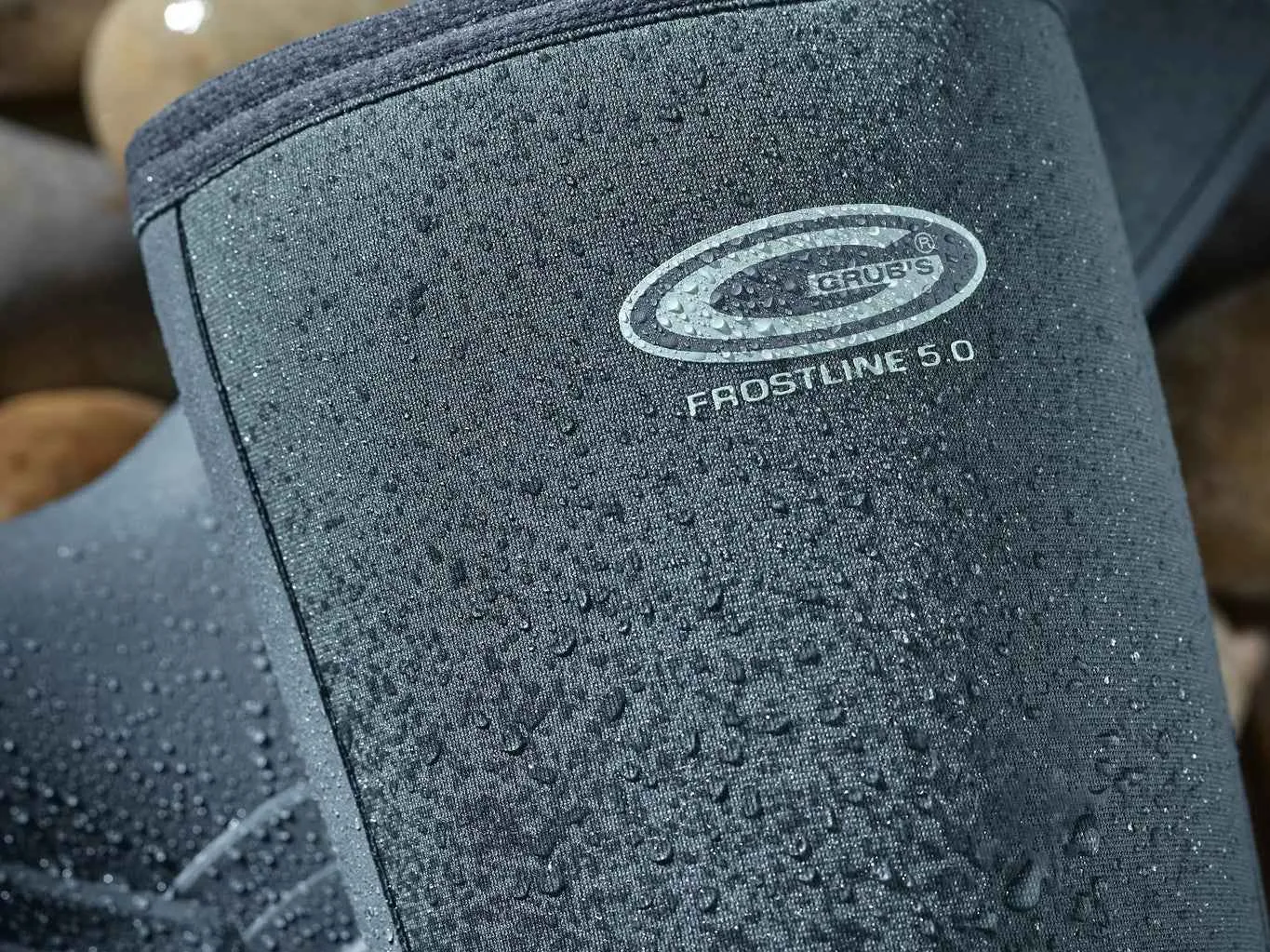
What's the actual difference?
A rubber welly is the classic: a moulded rubber shell from sole to knee. It's 100% waterproof, easy to wipe clean and tough. On its own, though, rubber doesn't insulate much, which is why a basic unlined welly feels like a fridge in January.
A neoprene welly uses a neoprene foam upper, usually bonded to a rubber lower around the foot and ankle. Neoprene is the same closed-cell foam family as a wetsuit. It doesn't make heat, but it traps the heat your body makes. Ours is called INSUFOAM-ULTRA™ and comes in 3mm, 4mm, 5mm and 8.5mm thicknesses. Want the deep dive? Read neoprene wellies explained.
The lines blur, too. Our "rubber" Highline 2.0 has a 2mm neoprene lining, and both the Highline and Rainline have a NEOPRENE FLEX-PANEL™ at the calf.
Neoprene vs rubber, head to head
| Neoprene (e.g. Frostline 5.0) | Rubber (e.g. Rainline 2.0 / Highline 2.0) | |
|---|---|---|
| Warmth | High. 5mm INSUFOAM-ULTRA™, rated -20°C to +20°C | Moderate. Rated -10°C to +20°C |
| Comfort and flex | Soft, flexes with your leg and ankle | Firmer shell, softened by the neoprene flex panel |
| Calf fit | Stretches by up to 50% to fit wider calves | NEOPRENE FLEX-PANEL™ gives a better calf fit than plain rubber |
| Mild-weather wear | Can get warm above +20°C | Cooler and lighter-feeling in spring and summer |
| Cleaning | Hose the rubber lower, wipe the neoprene | Easiest of all. Hose and go |
| Look | Sporty, technical | Classic country welly |
| Best for | Winter, farm work, long days, standing still | Rain, gardening, festivals, mild weather |
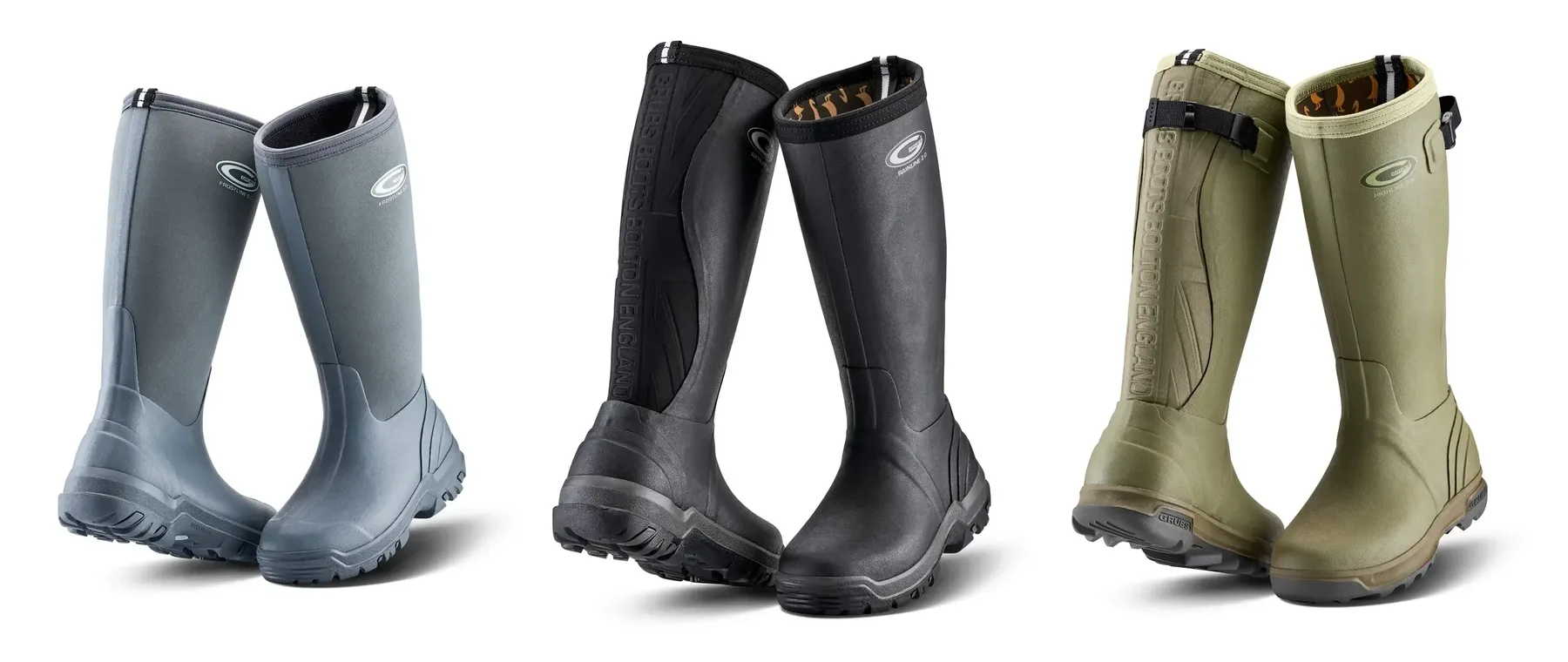
When neoprene wins
- Cold days and early mornings. 5mm neoprene and a 6mm NITROCELL™ footbed keep warmth in and cold ground out. The Frostline 5.0 is rated to -20°C.
- Standing about. Feeding round, watching a match, waiting for the dog. Neoprene shines when you're not moving.
- All-day comfort. A soft upper moves with you, so you're less likely to get the rubbing at the back of the calf you can get with stiff wellies.
- Wider calves. Grubs neoprene stretches by up to 50%, unlike rubber, so it fits wider calves that classic rubber wellies won't. Roll the top down, step in, then roll it back up over your calf. See our wide calf sizing guide.
When rubber wins
- Mild, wet weather. If it's 15°C and tipping down, a lined rubber welly is cooler and just as dry.
- Muck and hosing down. A full rubber shell is the easiest thing in the world to clean.
- A classic look. The Rainline 2.0 comes in Aubergine, Black, Navy and Huckleberry. The Highline 2.0 comes in Green and Mahogany.
What makes Grubs rubber boots different from a basic welly?
Most basic rubber wellies are a shell and a thin insole, and that's it. Our rubber boots are built for comfort as well as keeping you dry:
- HEXZORB™ in the heel absorbs shock and reduces strain on your knees and lower back.
- The NEOPRENE FLEX-PANEL™ gives a great calf fit and is 100% waterproof.
- The Rainline 2.0 adds a SUPERDRI™ lining that wicks moisture, plus a NITROCELL™ footbed to insulate you from cold ground.
- The Highline 2.0 adds a 2mm neoprene lining for a bit of extra warmth.
- Both use a DURAPRENE™ rubber outsole, TRAX™ on the Rainline and TRED™ on the Highline, with a tread designed to work with the action of your foot.
What makes Grubs neoprene boots different?
- Choice of thickness. 3mm, 4mm, 5mm or 8.5mm, so you match the boot to the weather. Our guide to how warm insulated wellies should be helps you choose.
- SUPERDRI™ lining on most of the range. It's fungus and rot proof, so it won't smell like cotton-lined boots.
- Rubber where it matters. A tough rubber lower around the foot and ankle takes the knocks.
Compare the whole range in our Outdoor Leisure collection.
Neoprene vs rubber: your questions
Are neoprene wellies warmer than rubber?
Yes. Neoprene traps body heat, while rubber on its own insulates very little. In the Grubs range, our 5mm neoprene Frostline 5.0 is rated -20°C to +20°C, and our lined rubber Rainline 2.0 and Highline 2.0 are rated -10°C to +20°C.
Are neoprene wellies fully waterproof?
Yes. Neoprene is a waterproof closed-cell foam, and Grubs neoprene boots pair it with a rubber lower around the foot and ankle.
Are rubber wellies better in summer?
Generally, yes. A lined rubber welly is cooler than thick neoprene when it's warm and wet. Most of our neoprene boots are rated up to +20°C.
Which lasts longer, neoprene or rubber?
Both last for years with a bit of care. Rinse off mud, dry away from direct heat and store upright. A rot-proof lining like SUPERDRI™ helps the inside last too.
Which is better for wide calves?
Neoprene. Grubs neoprene stretches by up to 50%, so it fits wider calves, and you can roll the top down to step in, then roll it back up over your calf. If you prefer rubber, pick one with a neoprene calf panel, like the Rainline 2.0 or Highline 2.0.
Still torn? Lots of our customers own one of each: a neoprene boot for winter and a rubber one for summer rain. Have a browse of the Outdoor Leisure range.